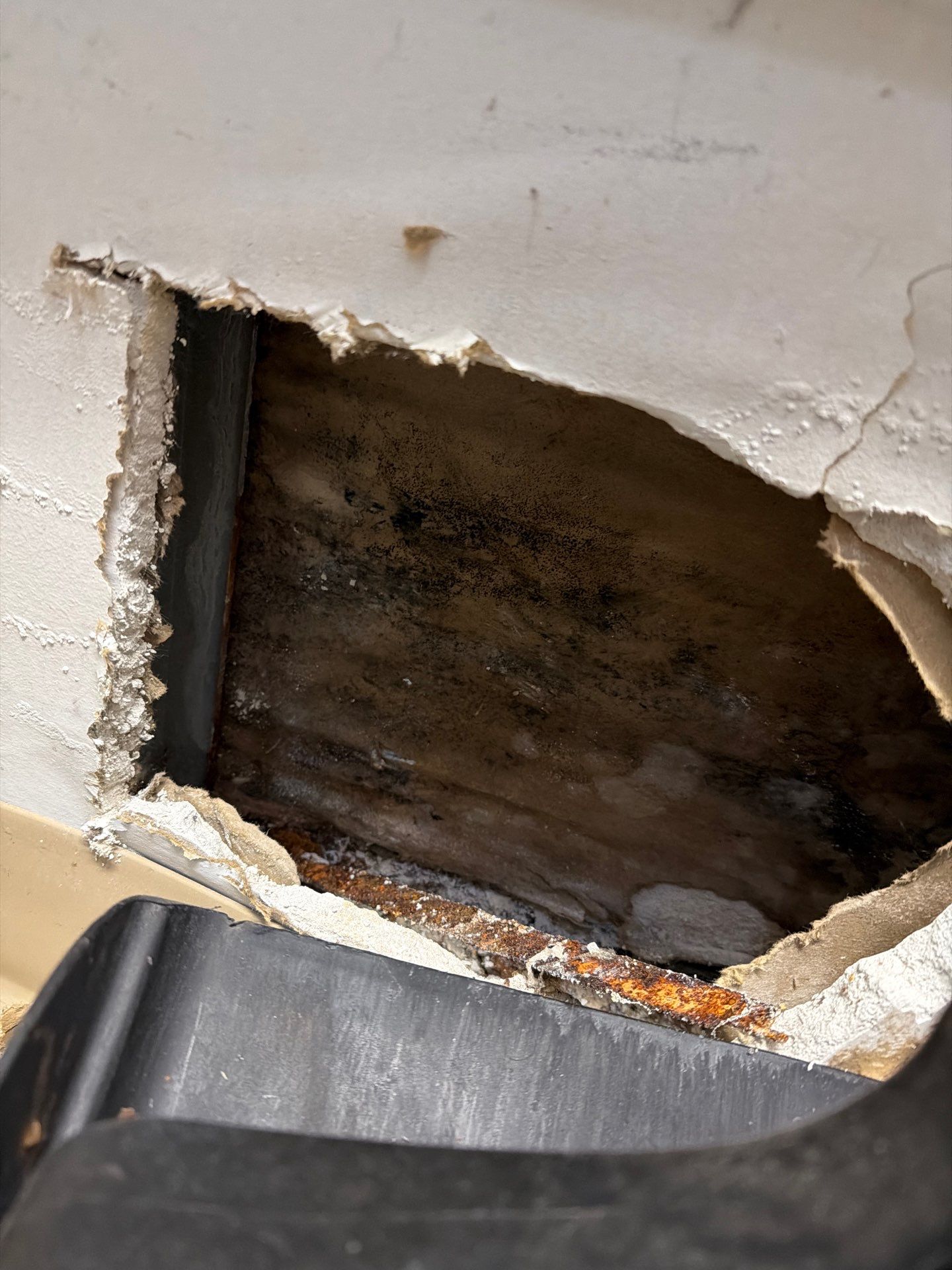
Problem: The Condensate Line Is Clogged and Water Is Backing Up
Algae, dust, and biofilm build inside the PVC drain line over time. When the line plugs, the safety float switch should kill the AC, but many older units in Imperial Hills homes do not have one or the switch is bypassed. Water then rises in the secondary pan and overflows.
Solution: Clear the Line and Restore Drainage
Shut the system off at the thermostat and the breaker. Locate the condensate drain access (a capped T fitting near the air handler) and use a wet/dry vac on the outdoor termination to pull the clog. A 1:1 white vinegar flush every 90 days prevents repeat blockages. If the line is pitched wrong or sagging, a permanent fix means re-running PVC with a continuous slope. We coordinate with HVAC partners across Imperial Hills so the plumbing fix and the water cleanup happen in the same visit. Pay attention to the termination point outside as well. If it sits in mulch or against a foundation wall, debris and insects creep back in and the cycle starts over within a season.
Problem: The Ceiling Below the Air Handler Is Sagging or Stained
Second floor or attic units are the worst offenders. Drywall absorbs water from above, the paper face bubbles, and the gypsum loses tensile strength. A sagging ceiling is not cosmetic. It is a collapse risk over your bed, kitchen, or living room.
Solution: Inspect, Dry, and Replace Compromised Drywall
We use thermal imaging and pinless moisture meters to map the wet zone, which usually extends 2 to 4 feet beyond the visible stain. Saturated drywall above 30% moisture content cannot be saved and gets cut out in clean rectangles. Insulation behind it is removed because wet fiberglass loses R-value and harbors microbial growth. Air movers and a dehumidifier run for 3 to 5 days to dry framing back to 15% or lower. We also check the top side of the ceiling from the attic when possible, because pooled water often sits on the vapor barrier above the drywall and keeps feeding the stain even after the leak stops. If you want a deeper look at how this works for overhead leaks, our breakdown of ceiling water damage and leak repair walks through the full process.
Problem: The Drip Pan Rusted Through or Cracked
Galvanized steel pans corrode after 8 to 12 years of constant condensate exposure. Plastic secondary pans crack at the fittings. Once either fails, water bypasses every safety the manufacturer designed and runs straight into the structure below.
Solution: Replace the Pan and Add a Float Switch
- Have your HVAC tech swap in a new primary pan and install an emergency secondary pan under the unit if the closet allows.
- Add a wired float switch to both pans so the system shuts down before the next overflow.
- Schedule annual coil and pan cleaning each spring before Imperial Hills humidity climbs in May and June.
A pan tablet dropped in each spring slows biofilm and keeps the metal from pitting as fast. It is a five dollar fix that buys years of service life.
Problem: You Need This Covered by Insurance
Most homeowner policies cover sudden and accidental discharge from an AC system. They typically exclude long term seepage and lack of maintenance. The line between the two is documentation.
Solution: Document Everything Before You Touch It
Photograph the air handler, the pan, the stains, and the affected rooms before any cleanup. Save the HVAC service invoice that identifies the failure. Keep receipts for any prior maintenance, because a record of annual service shifts the conversation away from neglect. Imperial Hills Water Restoration provides moisture maps, drying logs, and IICRC S500 aligned scopes that adjusters in Imperial Hills accept without pushback. We bill the carrier directly when coverage is confirmed, so your out of pocket is usually just the deductible.
Problem: Hidden Water Has Reached the Subfloor or Wall Cavity
Air handlers in closets sit directly on subfloor. When the pan overflows, water wicks under vinyl plank, around baseboards, and into the bottom plate of adjacent walls. You smell it before you see it, a sweet musty note that gets stronger when the AC kicks on.
Solution: Open the Cavity and Dry From the Inside
Surface drying does nothing for trapped moisture. We drill small inspection holes at the base of suspect walls, confirm readings with a probe meter, and use injection drying systems that push warm dry air directly into the cavity. For flooring, we lift a few planks or pull a baseboard section to read the subfloor. Particleboard subfloor swells permanently once saturated and almost always needs replacement, while plywood can often be dried in place if caught within the first few days. If you are seeing warping or cupping near the unit, our guide on subfloor water damage detection and repair cost explains what survives drying and what needs replacement.
Problem: Mold Is Starting to Grow Around the Air Handler
Mold needs 48 to 72 hours of moisture to colonize. A slow condensate leak that ran for a week guarantees growth, usually on the back of drywall, on framing, or inside the insulation around the supply plenum. You may see black speckling on the closet wall or smell it through the return.
Solution: Contain, Remove, and Verify
- Seal the closet with poly sheeting and run a HEPA air scrubber under negative pressure.
- Remove affected materials in containment, HEPA vacuum framing, and treat with an EPA registered antimicrobial.
- Replace insulation, rebuild drywall, and run a post-remediation verification before reopening the space.
Skipping containment spreads spores through the duct system to every room in your Imperial Hills home. Our team handles mold after water damage removal and prevention as a standard add-on for any AC leak that sat longer than two days. We also recommend a duct inspection after remediation, since the blower can pull spores into the supply trunk and recontaminate the closet within weeks.